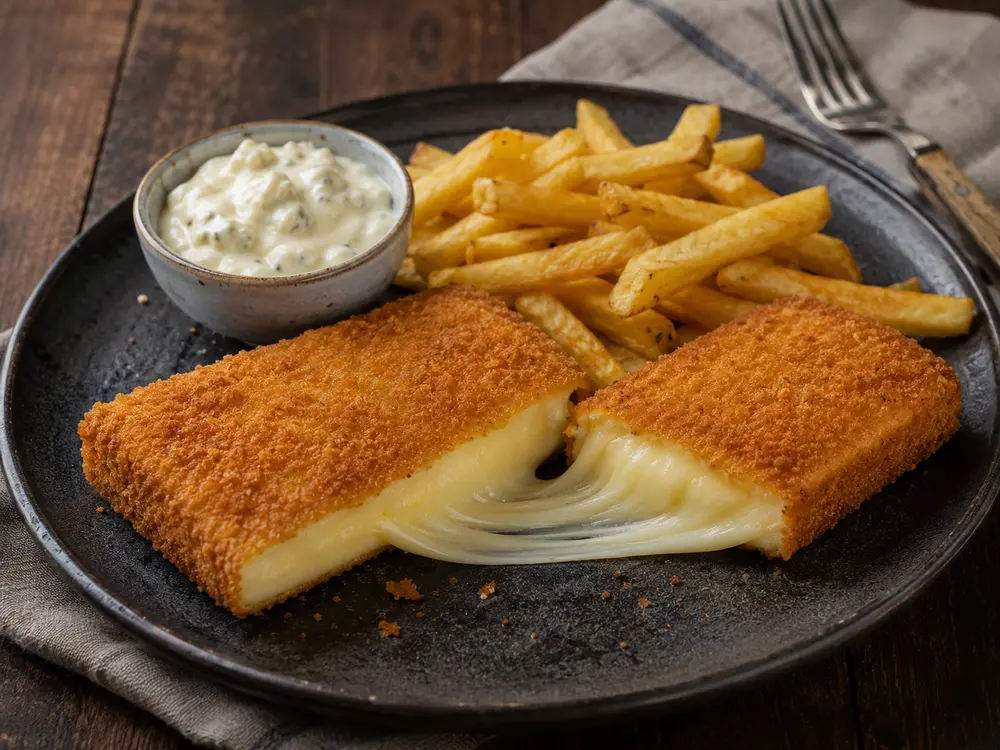
The defining moment of fried cheese is the first cut, when everyone discovers whether the molten centre stayed inside. If it did, the tartare sauce and side dish briefly become supporting actors.
Method, step by step
- Roll the cold cheese slices in flour, egg, breadcrumbs, then again in egg and breadcrumbs.
- Rest it in the fridge for at least 20 minutes so that the coat hardens. Do not shorten this stage: during the rest, the texture settles and the taste becomes more harmonious.
- Fry quickly in 175 °C oil until golden brown, turning only once. Work with a preheated oven and check color, smell and texture towards the end of the time, because ovens perform differently.
- Serve immediately with tartar sauce; processed cheese doesn't like to wait. Taste one last time before serving, then serve fresh to the table for the best temperature and texture.
Practical tips and common mistakes
- After double breading, chill for twenty minutes; this is the cheese's safety belt, not unnecessary bureaucracy.
- Cut the ingredients to the same size, so they are prepared more evenly.
- Add the spices in several portions and taste after each larger step.
- Only cool the leftovers and put them in the fridge, covered, and reheat them according to the nature of the food before consumption.