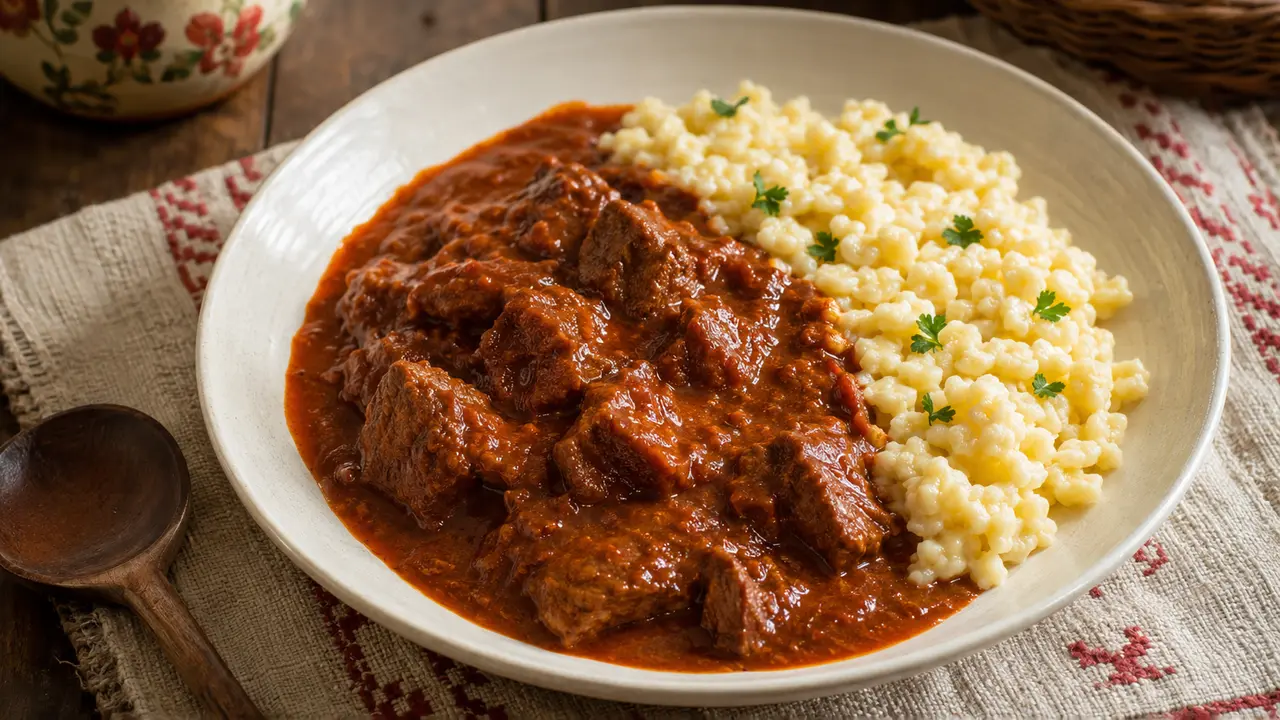
How did we "analyze" the family recipe?
In many families, grandmother's recipe does not exist in grams. It starts with "buy good meat", continues with "you need as many onions as you can take", and at the end it says: "it's good when it's ready". This is not an inaccuracy, but the shortened language of decades of experience. It is enough for those who have cooked it a hundred times. For those who stand next to the pot for the first time, it will be useful if there is an understandable handhold behind the movements.
That is why we have broken down a typical family beef stew description into steps: stewing onions, peppers, meat, a little liquid, slow cooking. The task of the AI was not to invent a new dish, but to answer three questions at each step: what happens to the raw material, what kind of error can spoil it, and what observable signal lets us know that we can move on. Some of the answers were really helpful. The algorithm correctly warned that moist meat does not brown well, and that the surface temperature drops in an overcrowded pan. It was also good advice not to leave the paprika in hot, dry fat for a long time.
Other proposals were already too "textbook-smelling". AI baking soda is recommended to speed up the browning of meat. This can work in certain techniques, but it easily gives a foreign flavor and unusual texture to a traditional stew, so we left it. He would also have made tomato puree and red wine mandatory, because they form the sauce in many international beef stews. However, the character of the Hungarian stew is provided by onions, good paprika, the meat's own juices and patient cooking. There are few tomatoes and green peppers, and wine is optional, not a basic requirement.
Ingredients for 6 servings
- 1.2 kg of beef shanks or beef shanks
- 350 g of red onion
- 3 tablespoons of pork fat
- 2 tablespoons sweet paprika
- 1 teaspoon hot pepper optional
- 2 cloves of garlic
- 1 teaspoon ground cumin
- 1 green pepper and 1 small tomato
- salt, black pepper, a little water or unsalted stock
- 500 g fine flour for nokedli
- 4 eggs
- 200–250 ml of water
- 1 teaspoon of salt
- 1 tablespoon of oil for the finished nokedli
- pickle or cucumber salad to serve
The traditional method, with technological explanations
- Choose the right meat. Legs and neck are active parts rich in connective tissue. They would be hard for a short time, but after a long, moist heat treatment, they become more crumbly and add body to the sauce. Cut the meat into 3-4 cm cubes, because the smaller pieces dry out more easily.
- The surface of the meat should be dry. Drain with a paper towel, then lightly salt. Heat the fat and fry in two or three batches. It doesn't need to be cooked all the way through; now we are only building a tasty, tanned surface. Set the meat aside after each serving.
- Don't just steam the onion until it's "glassy". Cook over medium, then low heat for 15-20 minutes until soft, golden and sweet. If it sticks, dissolve the stock from the bottom of the pot with a tablespoon or two of water. At the end, add the crushed garlic and cumin.
- Protect the pepper. Remove the pot from the heat, stir in the sweet and hot peppers, then add a little water within half a minute. Burnt peppers are bitter; you can't really save this later with either sugar or sour cream.
- Do not make soup from the stew. Return the meat, add the diced tomatoes and green pepper. First, add only 150–200 ml of liquid. Cook under the lid, with very little bubbling. Stir occasionally and add just enough liquid to prevent burning. The goal is a thick juice cooked with onions.
- Look at the image of the source instead of the temperature. Don't wave wildly. Strong boiling does not shorten the cooking time, but it breaks the structure of the meat, evaporates the liquid faster and makes it easier to get the juice. It usually takes 2-2.5 hours, but the age and part of the meat matter more than the hour.
- Do not rest the nokedli for a long time. Boil salt water. Mix the flour, eggs, salt and water just before chopping. You don't have to work it smooth: overmixed dough can be more flexible and harder. Drop it into the water and when it comes up, cook for about another minute.
- Rest the finished stew. For soft meat, turn off the heat, let it stand covered for 15-20 minutes, then taste. If the juice is thin, you can thicken it briefly, except for the meat; no flour mixture is necessary. At the end, adjust the salt and pepper.
Five AI suggestions - with verdict
It really gives a better brown and deeper flavor. The pot does not cool down suddenly.
A simple and important safeguard against bitter taste.
Faster browning is not worth risking the traditional taste and texture of the stew.
It can be good in other beef, but that doesn't make the Hungarian stew substantial.
The juice settles, the surface seems less greasy, and it is easier to adjust the flavors permanently.
Human added value: what does the algorithm not see?
AI can recommend temperatures and ratios, but it can't see how much water the onions have released, how old the beef is, how fresh and strong the peppers are, or how thick the bottom of the pot is. Therefore, the recipe cannot become a blindly followed technical instruction. Human inspection monitors the sound, smell and texture: the meat is sizzling or rather cooked; onions become sweet or brown; does the juice give a shiny, dense coating; does the meat give way to the fork?
Technology is a good companion here when it comes to explaining the old moves. Not when you turn every traditional dish into a restaurant lab exercise. The end result should still sound like a stew: peppery, oniony, juicy, but not a fatty soup and not a tomato-based beef ragu.