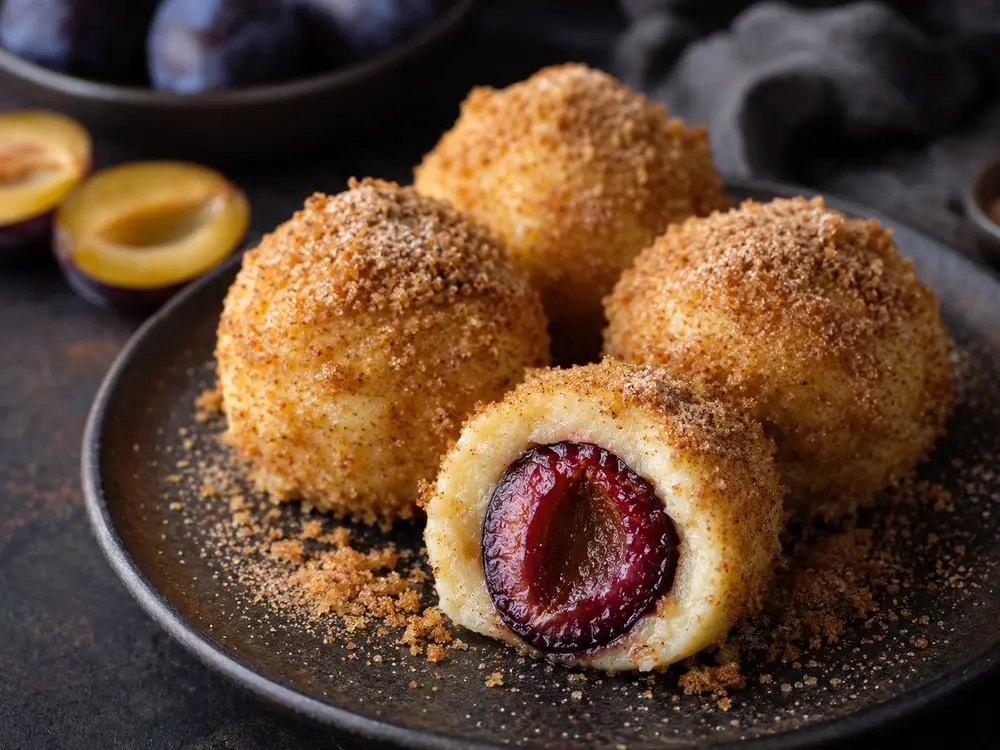
Plum dumplings look like identical balls of cinnamon crumbs, yet each hides its own fruit. The purple juice released by the first cut draws a different pattern on every plate.
Method, step by step
- Break the boiled potatoes in their skins and cool them completely. Do not shorten this stage: during the rest, the texture settles and the taste becomes more harmonious.
- Knead it with eggs, salt and enough flour to make a soft but formable dough. Mix or work just until uniform; over-mixing with more dough and foam can spoil the texture.
- Place plums stuffed with cinnamon sugar into the dough squares, and roll them into balls. Go slowly and check the texture, aroma and balance of flavors before each subsequent operation.
- After swimming, cook in sparkling water for another 2-3 minutes, then turn it into toasted crumbs.
Practical tips and common mistakes
- The dough ball is a must: if it falls apart, you need a little flour, not a family panic.
- When baking, measure accurately, and use the butter and eggs at the temperature required by the recipe.
- Let it cool completely or rest before slicing: the cutting surface will be nicer and the texture will be more orderly.
- Only cool the leftovers and put them in the fridge, covered, and reheat them according to the nature of the food before consumption.