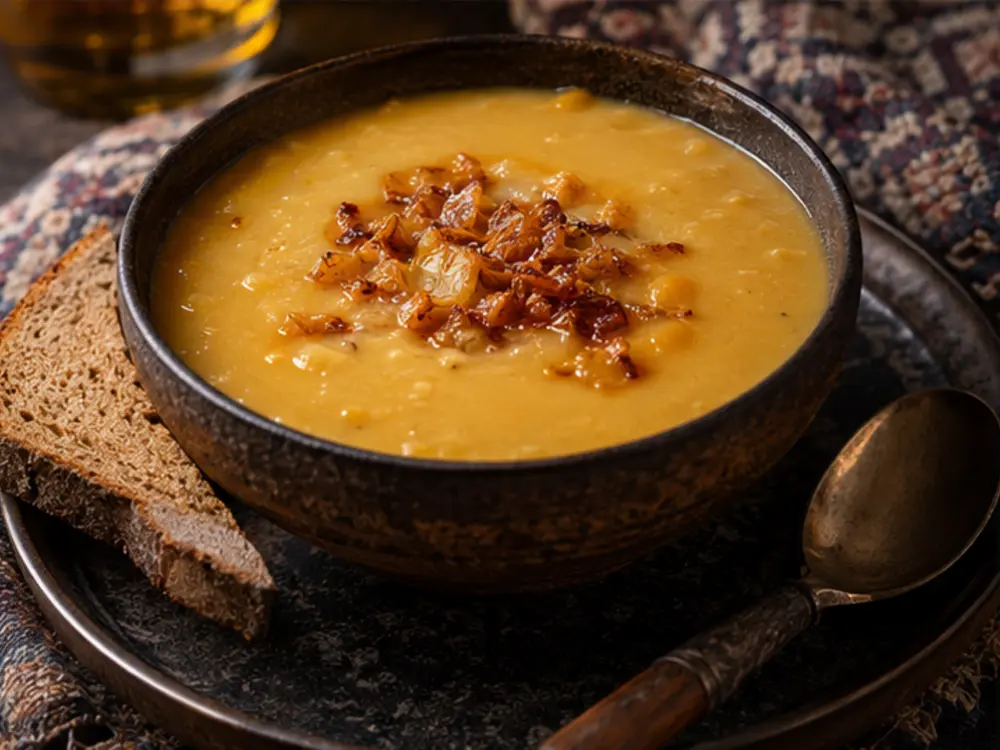
Split-pea soup thickens by itself as if it already knows the texture expected of it. Topped with fried onions, modest ingredients become a remarkably satisfying supper.
Method, step by step
- Wash the peas, soak them, then cook them in fresh water with onions and bay leaves.
- Skim off the foam, cook on low heat until completely soft.
- Take out the beans, partially blend them so that they remain creamy, yet rustic. Go slowly and check the texture, aroma and balance of flavors before each subsequent operation.
- Season with garlic and smoked paprika; serve with crispy onions. Taste one last time before serving, then serve fresh to the table for the best temperature and texture.
Practical tips and common mistakes
- Soak it for a couple of hours and only add salt at the end; so it softens faster and more evenly.
- Keep the soup at a gentle simmer: a strong boil can make it cloudy and break up the ingredients.
- Only cool the leftovers and put them in the fridge, covered, and reheat them according to the nature of the food before consumption.