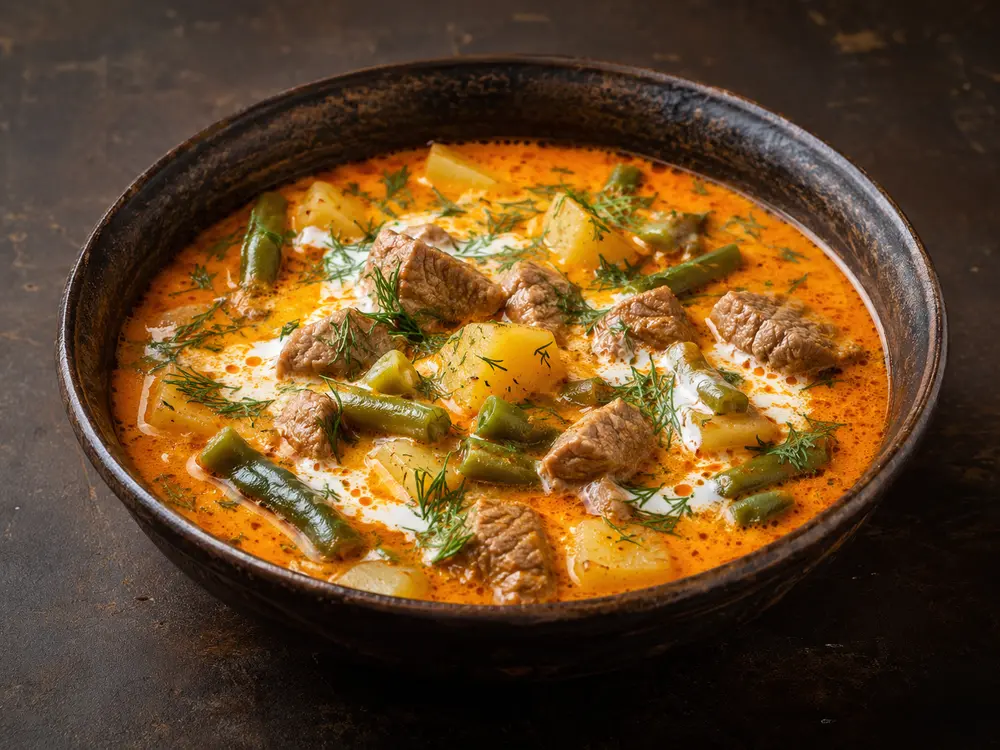
Palóc soup brings fresh green beans and dill together with a paprika stew base. Mutton makes it deeper, pork gentler, while the sour-cream and lemon finish balances either version.
Method, step by step
- Make a semi-soft ragu from the chosen meat on an onion-pepper base. Go slowly and check the texture, aroma and balance of flavors before each subsequent operation.
- Add the potatoes, bay leaves, and later the green beans and pour over the soup. Go slowly and check the texture, aroma and balance of flavors before each subsequent operation.
- Mix the sour cream with flour and hot soup until smooth, then knead it. Mix or work just until uniform; over-mixing with more dough and foam can spoil the texture.
- Adjust it with dill and lemon; it will be deeper than sheep, softer than pork — both are acceptable. Go slowly and check the texture, aroma and balance of flavors before each subsequent operation.
Practical tips and common mistakes
- Add the sour cream to equalize the heat, and add the dill and lemon at the end so that you don't cook the zest out of them.
- Keep the soup at a gentle simmer: a strong boil can make it cloudy and break up the ingredients.
- Only cool the leftovers and put them in the fridge, covered, and reheat them according to the nature of the food before consumption.