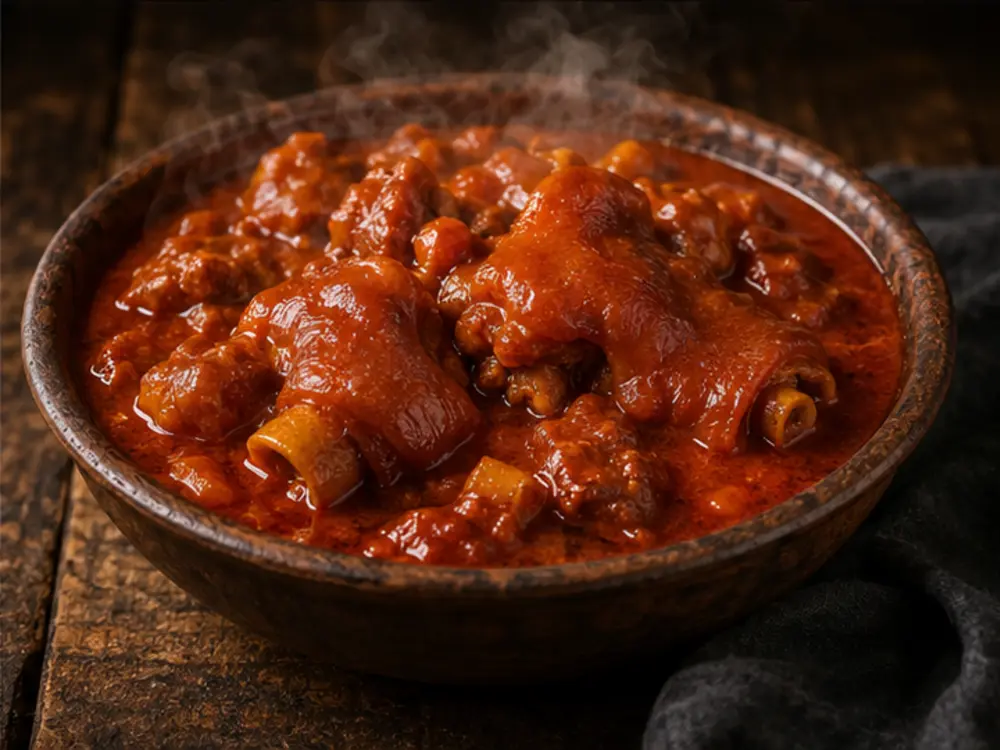
Pig-trotter stew cannot be rushed because bone and skin give the sauce its body. When the meat almost falls away by itself, bread receives an important job on the plate.
Method, step by step
- Clean the nail thoroughly, roll it in the onion-pepper base. Go slowly and check the texture, aroma and balance of flavors before each subsequent operation.
- Season, pour enough water to almost cover it. Go slowly and check the texture, aroma and balance of flavors before each subsequent operation.
- Cook on low heat for 3-4 hours until the meat falls off the bone.
- At the end, thicken the juice without a lid, serve with bread and pickles. Taste one last time before serving, then serve fresh to the table for the best temperature and texture.
Practical tips and common mistakes
- Cut the nail lengthwise and crosswise; he flexes more easily and wrestles back less at the plate.
- The pieces of meat should be similar in size, so they are cooked at the same time and none of the parts dry out.
- Allow the finished meat to rest briefly before serving; the juicier texture is worth the few minutes of waiting.
- Only cool the leftovers and put them in the fridge, covered, and reheat them according to the nature of the food before consumption.