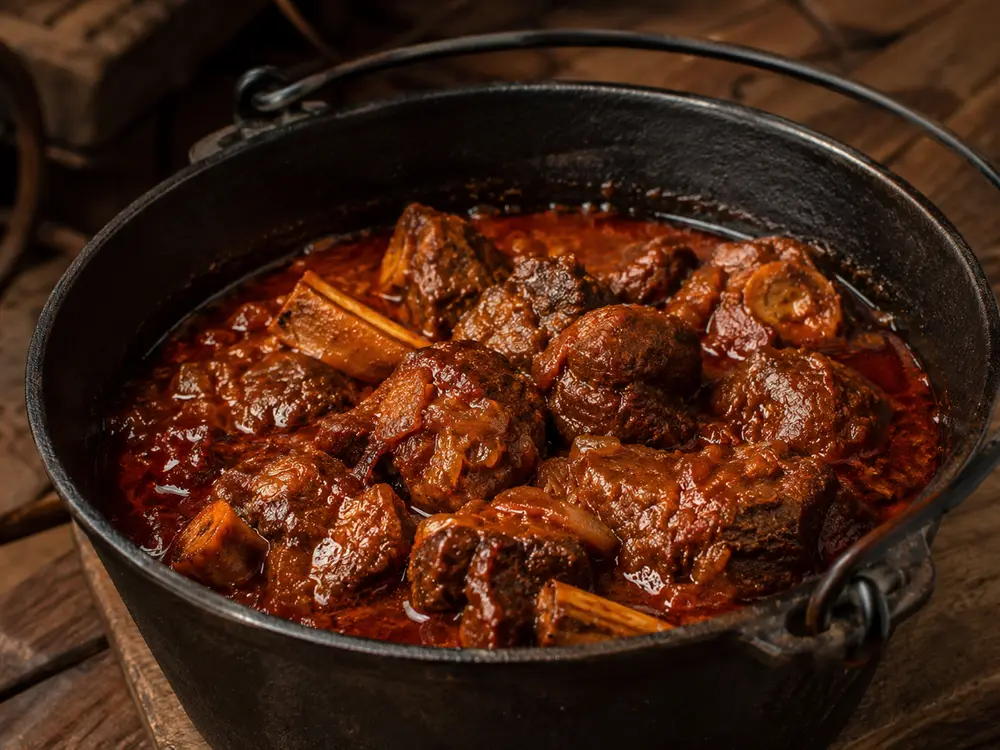
Karcag mutton stew is built in a cauldron from layered meat, bones and very little liquid. By the end of its long cooking, the mixed cuts create one dense sauce that needs no unnecessary embellishment.
Method, step by step
- Prepare the meat in portions; the different relaxation time is important in the case of traditional karcagi cooking. Go slowly and check the texture, aroma and balance of flavors before each subsequent operation.
- Place the bony parts, which are harder to soften, on the onion-fat base first. Go slowly and check the texture, aroma and balance of flavors before each subsequent operation.
- Add paprika, salt and cook slowly in its own juice with a little liquid; don't mix it up, move the pot instead.
- Add meats and offal that soften more quickly later, then cook until a thick, sticky sauce.
Practical tips and common mistakes
- Do not constantly stir with a spoon, rather shake the pot; mutton is not a washing machine program.
- The pieces of meat should be similar in size, so they are cooked at the same time and none of the parts dry out.
- Allow the finished meat to rest briefly before serving; the juicier texture is worth the few minutes of waiting.
- Only cool the leftovers and put them in the fridge, covered, and reheat them according to the nature of the food before consumption.