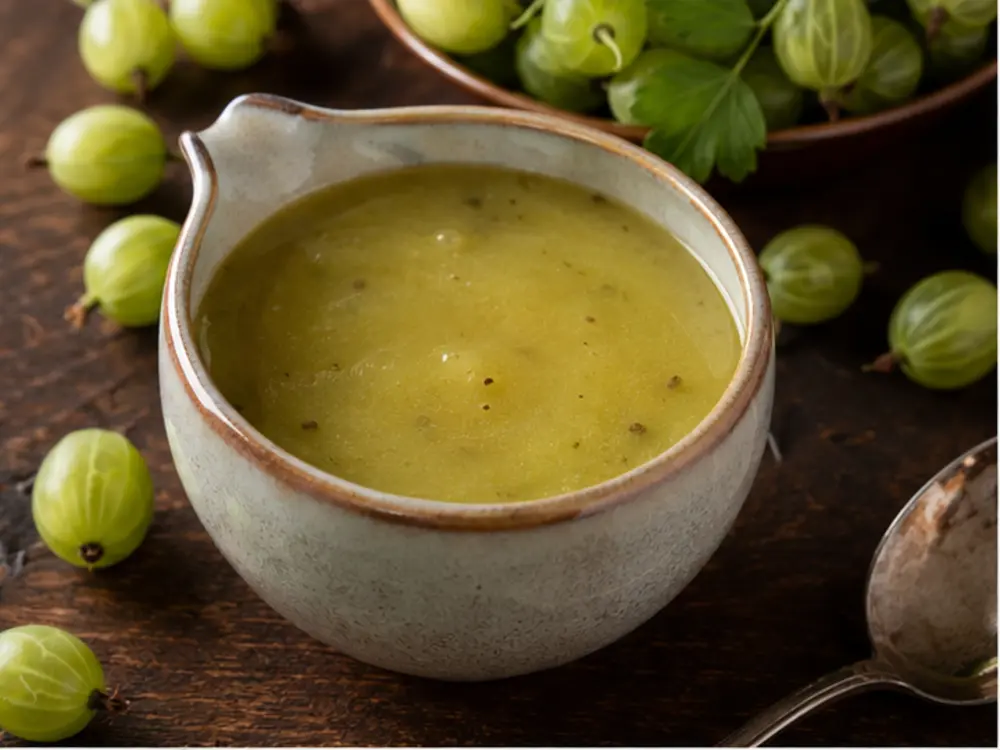
The first spoonful of gooseberry sauce wakes up the whole plate. Sharp, creamy and confident, it can turn a plain piece of boiled meat into a memorable lunch.
Method, step by step
- Clean the gooseberries, boil them until soft with a little water, sugar and lemon peel.
- Mix the sour cream or cream with starch and a little hot juice until smooth. Mix or work just until uniform; over-mixing with more dough and foam can spoil the texture.
- Pour it back, boil it for a minute, then taste it for a sweet and sour balance.
- Serves with lukewarm boiled or fried meat, and also works as a cold dessert. Go slowly and check the texture, aroma and balance of flavors before each subsequent operation.
Practical tips and common mistakes
- Add the sugar gradually: the gooseberries should remain fresh and sour, not turning into a green sugar syrup.
- Adjust the sweetness and acidity gradually, because the flavors may become more muted when cooled.
- Cool thoroughly before serving, then stir or shake to bring the flavors together again.
- Only cool the leftovers and put them in the fridge, covered, and reheat them according to the nature of the food before consumption.