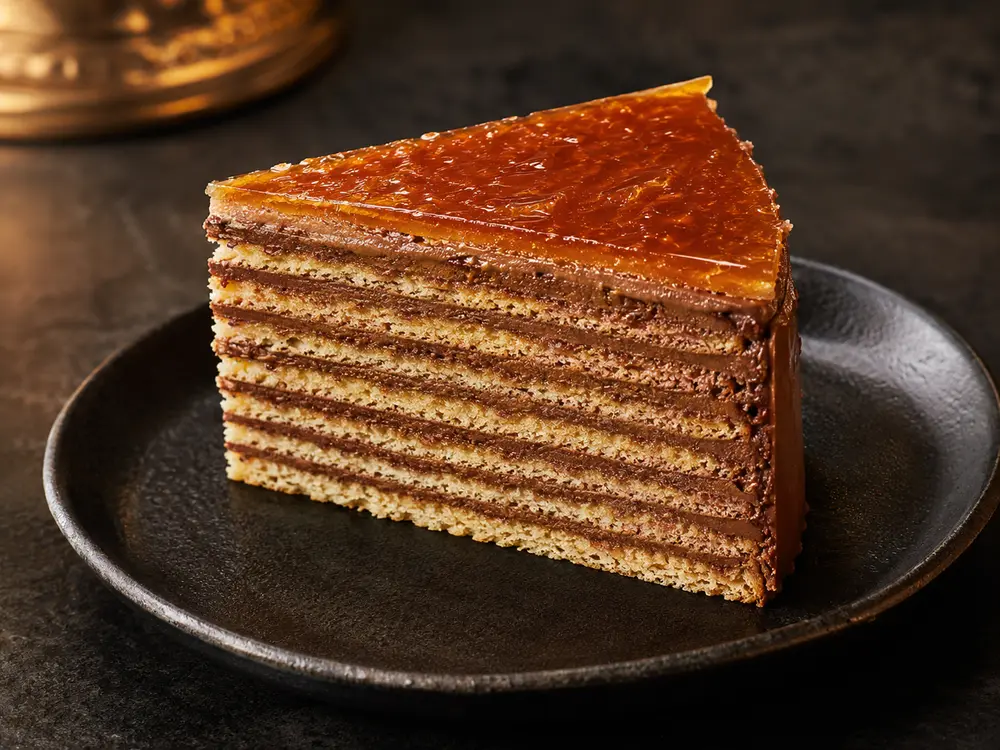
The top of a Dobos torte is more than decoration: cracking caramel introduces the thin sponge layers and chocolate buttercream below. Every slice repeats the same order, yet the caramel piece disappears first.
Method, step by step
- Bake six identical, thin sponge bases; cool them completely. Do not shorten this stage: during the rest, the texture settles and the taste becomes more harmonious.
- Make a light, smooth cream from the melted chocolate, butter and powdered sugar. Go slowly and check the texture, aroma and balance of flavors before each subsequent operation.
- Layer five sheets with the cream, coat the sides thinly as well. Go slowly and check the texture, aroma and balance of flavors before each subsequent operation.
- Pour light caramel onto the sixth sheet, quickly mark the slices, then place it on the cake once it has solidified.
Practical tips and common mistakes
- Mark the caramel with an oiled knife while it's still warm, otherwise the slicing will turn into a forge.
- When baking, measure accurately, and use the butter and eggs at the temperature required by the recipe.
- Let it cool completely or rest before slicing: the cutting surface will be nicer and the texture will be more orderly.
- Only cool the leftovers and put them in the fridge, covered, and reheat them according to the nature of the food before consumption.