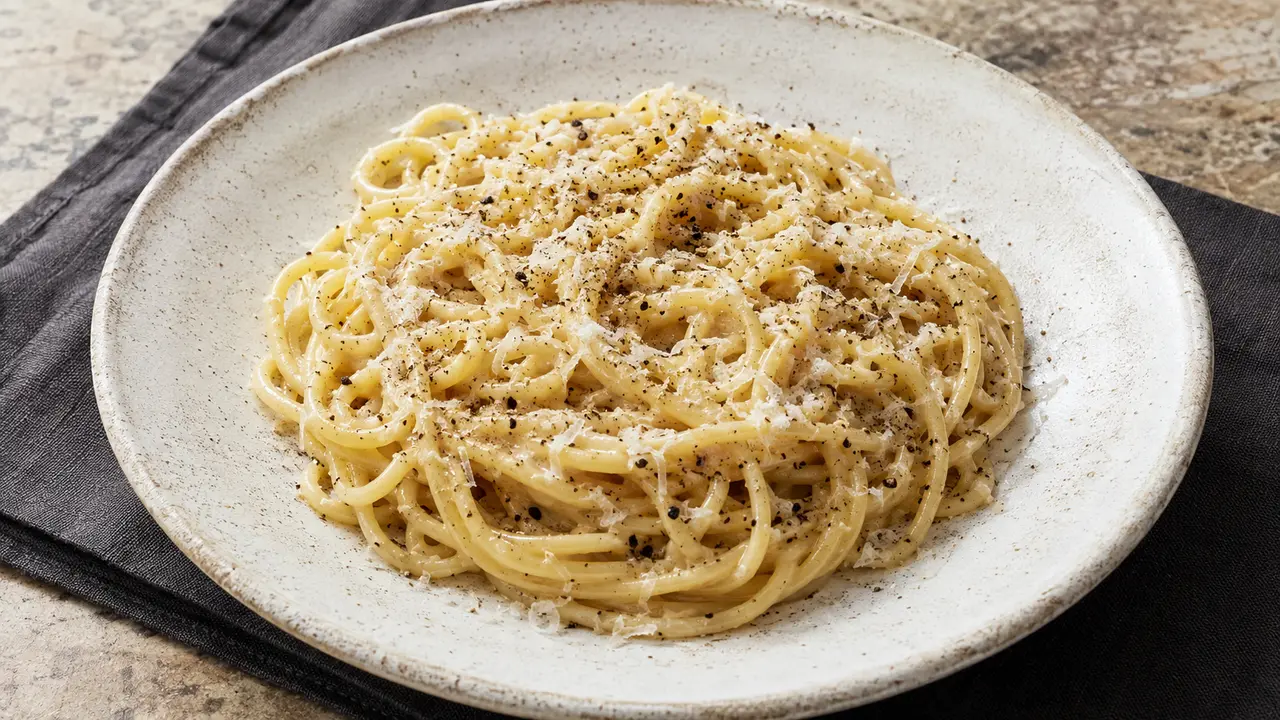
Cacio e pepe uses so few ingredients that mistakes have nowhere to hide. When pecorino, pepper and pasta water become a glossy cream, the plate feels both spare and rich.
Method, step by step
- Preparation: prepare all the ingredients, grate the cheeses, chop the necessary ingredients, and set aside a large mug for the pasta's starchy cooking water. With Italian pasta, it is important to have everything at hand due to the quick assembly.
- Toast the black pepper in a dry, large pan for half a minute until fragrant, then add a ladleful of cooking water.
- Cook the pasta with less salt than usual, because pecorino is very salty. Two minutes before al dente, transfer to the pan with pepper.
- In a separate bowl, work the pecorino into a thick, smooth paste with a little lukewarm cooking water. Do not use scalding hot water.
- Finish mixing the pasta in the pan with the cooking water, then remove from the heat and stir in the cream cheese.
- Serve immediately with fresh pepper. If necessary, use a little more cooking water to adjust the glossy sauce that sticks to the plate.
- Finishing and serving: serve the pasta immediately on a preheated plate. Before serving, check the consistency of the sauce; if it's too thick, loosen it with a little cooking water, if it's too thin, work it together with short, vigorous stirring.
Practical tips and common mistakes
- Don't mix the cheese in a hot pan: make a cream with lukewarm cooking water so it doesn't clump together.
- Cook the pasta until al dente, because it softens even more in the sauce.
- Grate the cheese finely and add it in several portions so that it melts smoothly.
- Serve fresh: these sauces thicken quickly as they stand.