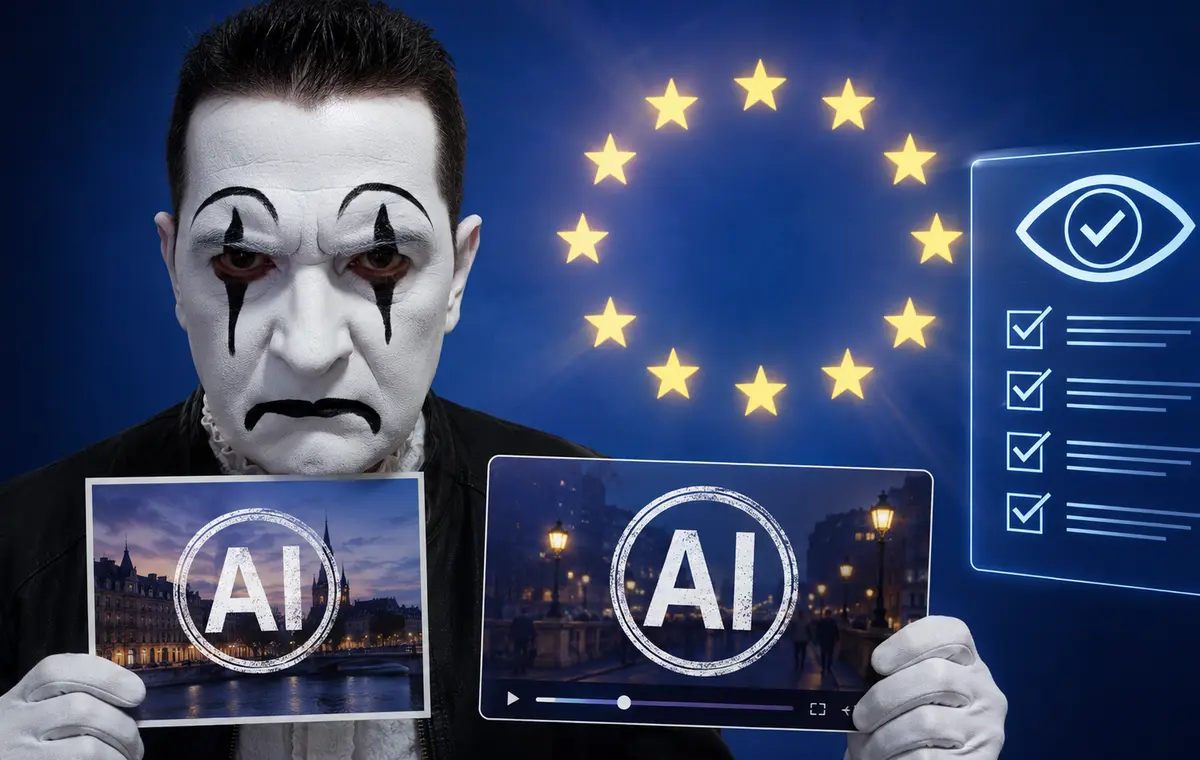
What is the purpose of the rule?
Viewers should be able to distinguish a real event from realistic synthetic content. Machine-readable marking by providers and visible disclosure by publishers may both matter, especially for content of public interest or material capable of misleading people.
Are there exceptions?
Personal use and clearly artistic, satirical or fictional works can be treated differently. An artistic context does not automatically remove every disclosure duty: context and the risk of deception still matter.
What do we do on this site?
We mark synthetic images used with news stories as “AI illustration”. The wording is simple and helps prevent an illustration from being mistaken for documentary photography.
Practical checklist
- Clearly label realistic generated images, video or audio.
- Do not present synthetic media as proof of a real event.
- Keep provenance information about how the material was created.
- For commercial or public-interest use, check the detailed rules that apply to your case.
Even the label gets a label
AI makes an image, so we write that AI made it. AI offers to write the notice too. We type it ourselves, just to keep at least one human in the story.