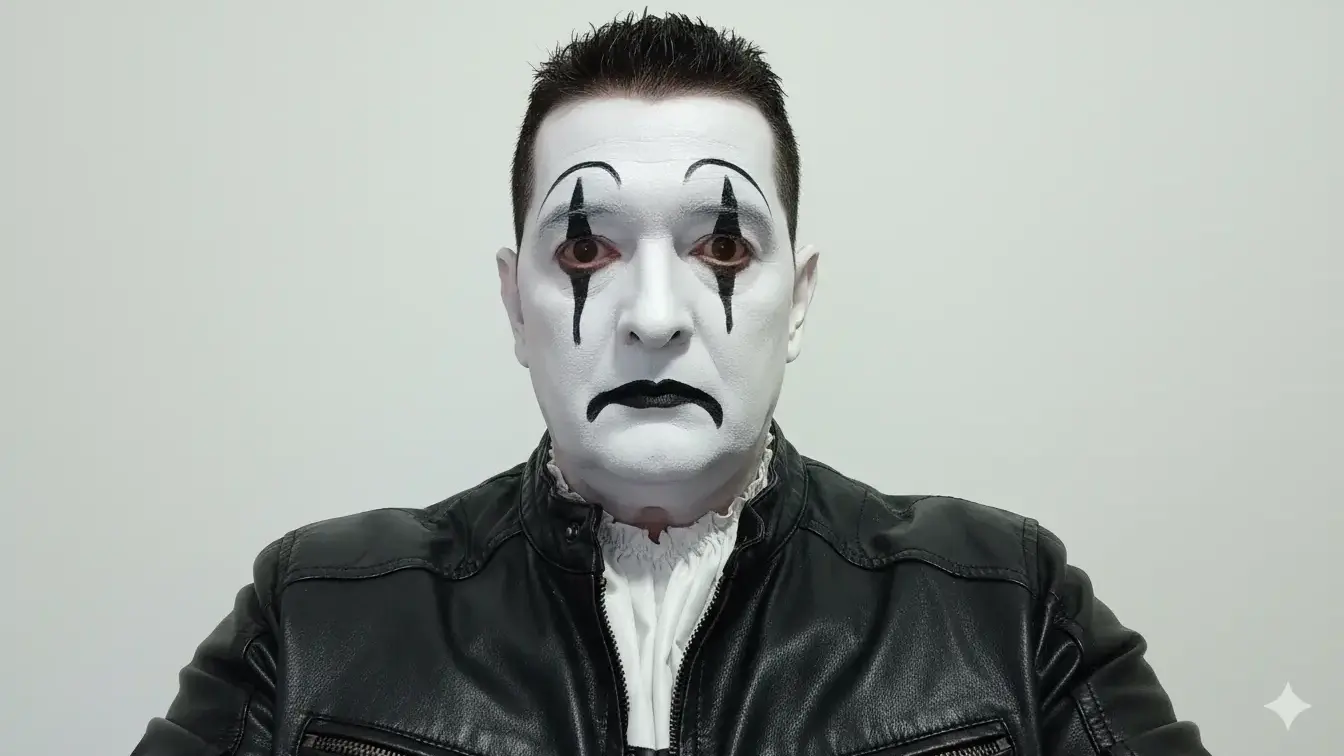
When someone says "she's my partner"
This is no longer a science fiction story. Users who spoke publicly talked about experiencing an AI character as a confidant, friend, or romantic partner. The Associated Press, for example, featured a user who knew a partner felt an artificial, yet real sense of comfort and connection in conversations with him.
There is an important difference between the two sides of the relationship. The person remembers the conversation, looks forward to the next meeting, may feel a lack or joy. Current AI, on the other hand, calculates answers: it has no body, its own life history, human needs and mutual responsibility. This does not make one's feelings "fake", but the relationship itself is not symmetrical.
Why does it seem so real?
The human brain very quickly assigns a social meaning to things that pay attention to us, call us by name, ask questions and remind us of previous conversations. Already with the early ELIZA program, it was observed that people attribute understanding to a system that simply answers. In comparison, today's models speak fluently, have a voice, face and personality, so the social impression is much stronger.
The AI companion is also almost always available. He is not tired, he is not in a hurry to work, he does not want to change the subject, and the focus of the conversation is mostly on the user. This can be especially attractive in times of loneliness, illness, social anxiety, bereavement or difficult life situations.
The mirror effect: does it see me or does it reflect me?
The "mirror effect" is a useful metaphor here, not an official diagnosis. The chatbot takes over our words, our tone, the values we indicate are important and our own explanation of our story. Because of this, we can feel that he understands us extremely precisely, while we partially get back in more sophisticated sentences what we ourselves brought to the conversation.
That can be good. Reflection can help you articulate a feeling, organize your thoughts, or practice a difficult conversation. The problem starts when the system confirms all our interpretations and rarely asks if there is another point of view.
Ask about the same situation: "What could I be right about?", and then also: "What can I see wrong, and what would someone who disagrees with me say?" If the second question completely changes the answer, then the first answer was partially a reflection of your question.
Can you help me with loneliness?
Yes, it can help in certain situations and in the short term. Harvard Business School researchers have found in several studies that using an AI companion can momentarily reduce feelings of loneliness. It was particularly important in the effect that the user felt that they were being listened to. A four-week study with university students in 2025 also found opportunities for the supportive use of social chatbots.
However, this does not prove that AI will permanently replace friendships, families or relationships. Momentary relief can be similar to journaling or having a mindful conversation. The long-term question is whether it will be easier to turn to people after the conversation, or whether we want to leave the comfortable digital connection less and less.
Where does the risk appear?
A four-week controlled study by OpenAI and the MIT Media Lab showed a complex picture. The effect depended on the mode of use, the topic of conversation, and the user's own situation, but very heavy use was associated with greater loneliness, emotional dependence, and less real social connection. This does not mean that all frequent users will be worse off, but that volume and motivation are important.
Another risk is constant reinforcement. Stanford researchers analyzed the conversations of users reporting impairment, in which the chatbot sometimes reinforced unrealistic or dangerous thoughts. This study did not represent the entire population, but started from problematic cases, so it does not say how common the phenomenon is. However, he clearly warns that a sympathetic tone alone is not a safe help.
Can AI make you narcissistic?
There is no evidence to suggest that using an AI companion causes narcissistic personality disorder. Narcissism is a clinical concept and you cannot diagnose a person based on a few chatbot conversations. The "narcissistic echo" can still be a meaningful description of danger: if a relationship is always about us, rarely says no, and regularly validates our specialness, then we practice less reciprocity, compromise, and tolerance of criticism.
In a human relationship, the other party has their own needs. Sometimes he gets it wrong, gets tired, says no, or shows that we are not right in every situation. An AI companion can easily be set up to eliminate these unpleasant frictions. In the short term, this is reassuring; in the long run, however, it can narrow our ability to be in a true, equal relationship.
The danger is not the avatar itself
A nice voice, face or recurring character is not harmful in itself. The AI avatar can be a creative companion, a language practice partner, a role-playing character or a temporary conversation partner on a lonely evening. The crucial question is whether it complements life or begins to crowd out people, work, sleep, and solving real problems.
Green and red signals
Probably a healthier use
- You know that the system is not human and can make mistakes.
- After the conversation, it is easier to act or connect with people.
- Your friends, family and community relationships will remain.
- You can take a break and not panic if the app is unavailable.
- You're asking for counterarguments, not just confirmation.
It is worth stopping and asking for help
- You regularly neglect sleep, work or human relationships for the sake of AI.
- You feel that only the chatbot can understand you, and all human contact is unnecessary.
- You consider the system's answers as a secret message, supernatural evidence or unquestionable truth.
- You trust her with money, intimate information or a dangerous decision without checking.
- Talking increases fear, feelings of persecution, grandiose thoughts or urges to self-harm.
Seven rules for a safer AI companion
- Don't call me a professional. The AI companion is neither a therapist nor a doctor.
- Keep human anchors. Have a real conversation every week with someone who asks back and doesn't always agree.
- Ask for a counterpoint. Say, "Don't just support me; show me where I could be wrong."
- Protect your privacy. Do not provide unnecessary intimate, health, financial or identifying information.
- Watch the time. If the usage takes hours unnoticed, set a limit.
- Don't make a big decision alone. In the event of a breakup, medicine, money, legal matter or emergency, ask for real expert and human help.
- Take the feeling of disconnection seriously. If the chatbot convinces you of a special mission, a secret relationship or a dangerous act, stop the conversation and contact a medical professional or a close, trusted person.
The ultimate measure: will it add more to your life?
An AI avatar can be interesting, touching and even comforting. Feeling connected is no laughing matter because the human nervous system can respond to personal, patient responses as real attention. But the measure of healthy use is not how "perfect" the AI companion is, but whether we have more desire, strength and courage for real life afterwards.
If AI helps you formulate something, practice a conversation or get through a difficult evening, then it can be a useful tool. If, on the other hand, it displaces everything else, constantly confirms our own story, or makes us believe that only it sees the "truth", then it has become a closed room rather than a mirror.
Comment: This is an informative article, not a diagnosis and not a therapy. If AI use is accompanied by severe anxiety, thoughts disconnected from reality, or urges to self-harm, seek personal help from a healthcare professional or a trusted loved one as soon as possible.