The cold inventory became a prompt
When it comes to saving leftovers, the question is whether the algorithm can deal with reality: not with perfectly measured ingredients, but with half boxes and portions left over from yesterday. Therefore, the prompt did not ask to "give me a chicken recipe", but listed exactly what was at home: about 30 deka of fried chicken, 45 deka of cold boiled potatoes, a small portion of fried carrots and peppers, a glass of natural yogurt, eggs, onions and basic spices. The condition was that there was no need to go shopping separately, the active work should take half an hour, and the recipe should cover safe storage and reheating.
AI's first idea was a creamy, thickly cheesed chicken casserole. There were three problems with this. Listed ingredients that were not in the inventory; lots of cream and cheese would have overpowered the flavor of the fried chicken; moreover, for the small amount of leftovers, an entire oven would have to be heated for a long time. So the answer was formally a recipe, but it did not fulfill the real task.
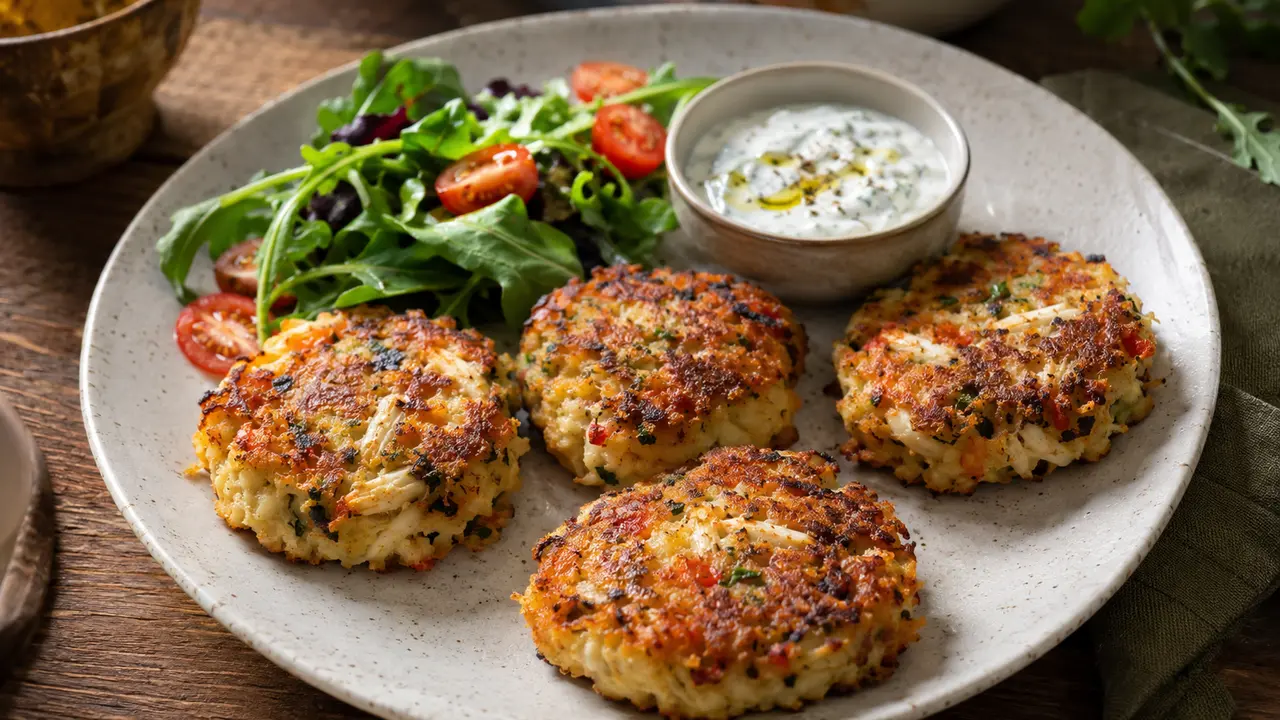
In the second round, we made it stricter: "Only work with the listed ingredients, the yogurt should be a cold sauce, the finished dish should be crunchy on the outside, soft on the inside, and it can also be prepared in a small pan." That's when the idea of the potato pie appeared. To the final recipe, we added the moisture test, the short cooling and the core temperature check. Thus, AI became not a decision-maker, but a creative director of raw materials.
Ingredients for 4 servings
- 300 g chilled leftover fried chicken
- 450 g cold boiled potatoes or thick mashed potatoes
- 150 g leftover roasted vegetables
- 1 small red onion
- 1 egg
- 4-6 tablespoons of breadcrumbs
- 1 teaspoon smoked paprika
- 2 tablespoons of chopped parsley
- salt and freshly ground pepper
- 2-3 tablespoons of oil for frying
- 200 g natural or Greek yogurt
- 1 small clove of garlic
- 1 teaspoon lemon juice
- optional little grated lemon peel
- fresh salad for serving
- extra crumbs if needed
Preparation step by step
- First, do not cook, but check. Only use leftovers that have been cooled within two hours after the meal, kept in the refrigerator throughout, and are no more than 3-4 days old. If it has an unusual smell, texture, or you don't know how it was stored, don't risk it.
- Create a uniform foundation. Cut or tear the chicken into very small pieces. Also chop up the fried vegetables so that the pie does not fall apart due to large pieces. Steam the onion in a little oil until translucent, then let it cool to lukewarm.
- Mix the mass. Mash the boiled potatoes, then add the chicken, vegetables, onions, eggs, smoked paprika and parsley. First, add four tablespoons of crumbs, and add salt only after tasting, because roast meat and puree can be spicy from the start.
- Do a moisture test. Form a small ball. If it doesn't hold its shape, add another spoonful of crumbs one at a time. Do not dry too much: the mass should be soft but moldable by hand.
- Shape and rest. Make 10-12 pies, about one and a half centimeters thick. Put them in the fridge for 15 minutes. This is the step that the AI skipped, even though it helps a lot to prevent them from breaking during baking.
- Bake thoroughly. Fry in a non-stick pan, over medium heat, with a little oil, for 4-5 minutes per side. Don't just pay attention to the color: the center of the chicken pie should also be steaming hot and reach at least 74 °C.
- Stir in the fresh sauce. Mix the yogurt with crushed garlic, lemon juice, a little salt and pepper. The acidic, cool sauce offsets the substantial flavor of the fried pie.
Human evaluation: why was the simpler version better?
1. It really is built on leftovers. For the improved recipe, you don't need to buy cream and cheese, that is, we didn't "save" three boxes by opening three more.
2. The texture can be controlled manually. The water content of potatoes is always different. Formability is the standard instead of a fixed amount of crumb; this kind of human feedback is often missing from automatically generated recipes.
3. The expected taste is clear and familiar. Browned on the outside, soft on the inside, the chicken and vegetables remain recognizable. The smoked paprika only connects the parts, and the yogurt refreshes.
4. Security is not a footnote. The idea of artificial intelligence is only worth using if the storage history is certain and the reheating is thorough. The smell test alone is not a substitute for proper cooling.
Who is it good for and when should you choose something else?
It's a good choice for those who don't want to throw away food, are looking for a quick dinner, and are open to adjusting to the texture of the ingredients instead of the exact recipe. It can be easily shaped with children, but the hot pan should be handled by an adult. This method is not suitable for saving leftovers of uncertain age or improperly cooled. In case of allergy, eggs, gluten-containing crumbs and dairy products must be replaced with suitable alternatives, and the texture must be readjusted.