How did we ask AI?
The purpose of the prompt was not simply a duck recipe. We asked the AI to find acidic fruit, which is also familiar in Hungary, to go with the rich duck meat, to avoid too sweet orange sauce, and to explain how the flavors are connected to each other. The request also stated that the sauce should not cover the crispy skin, should not contain rare ingredients, and should also have an alcohol-free version.
The algorithm started in the right direction with the cherry. The acidity can really counterbalance the fat of the duck, and the darker aromas of the fruit go well with the seared meat. However, the answer soon became too enthusiastic: he recommended dark chocolate, cinnamon, star anise, balsamic vinegar, red wine, honey and rosemary at the same time. These can be functional elements separately, but together they easily turn the plate into a Christmas dessert sauce.
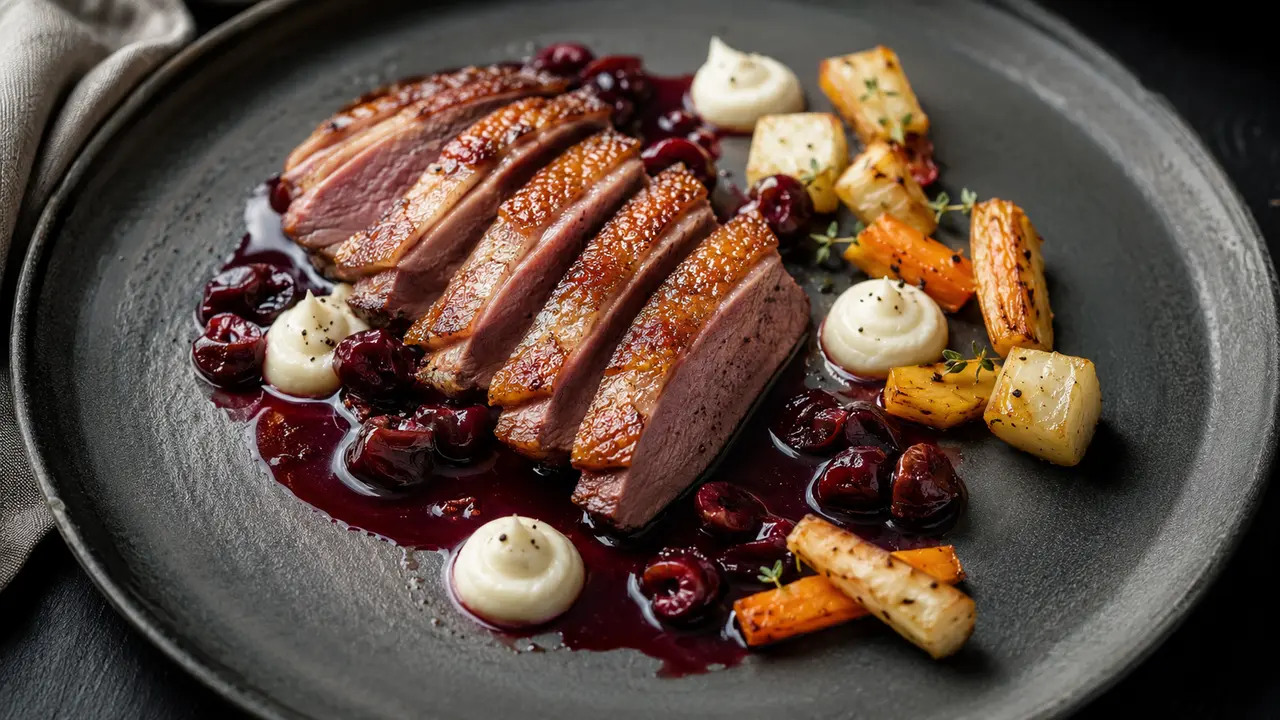
Human editing therefore followed a simple rule: a main fruit, a spicy bridge, an herb and an acidic finish. The sour cherry is the protagonist, black pepper connects the fruit with the meat, thyme gives a background aroma, and a little red wine vinegar at the end makes the balance more precise. Honey is added only if the cherry is really too sour. In the non-alcoholic version, red wine is replaced by unsweetened cherry juice.
Ingredients for 4 servings
- 4 pieces of duck breast with skin, each weighing 180–200 g
- 1.5 teaspoons of salt
- 1 teaspoon coarsely ground black pepper
- 300 g fresh or frozen pitted cherries
- 1 small shallot or half a red onion
- 100 ml dry red wine
- non-alcoholic 100 ml unsweetened cherry juice
- 100 ml of chicken broth
- 1 teaspoon red wine vinegar
- 1 teaspoon honey, only if needed
- 2 sprigs of thyme
- 10 g of cold butter to finish
Preparation step by step
- Prepare the duck exactly. Dry the meat with a paper towel. Score the skin in a diamond shape with a sharp knife, but do not cut into the meat. Season with salt and let stand in a cool place for 15-20 minutes.
- Start from a cold pan. Place the breasts, skin side down, in a cold, dry pan, then turn the heat to medium. Fat melts more evenly from the slowly warming skin. Pour off the melted fat from time to time and set it aside for other cooking.
- Toast, then bake until done safely. When the skin is deep golden brown and crispy, turn it over and fry the fleshy side for 1-2 minutes. Then continue cooking in an oven at 180 °C or with a lid on a lower flame until the core temperature of the thickest part reaches 74 °C.
- Give it a rest. Place the finished duck breast on a clean board, loosely cover it and let it rest for 8-10 minutes. This way, less juice escapes when slicing.
- Build a simple sauce. Leave only a teaspoon of duck fat in the pan. Steam the finely chopped onion in it, add the cherries, red wine or cherry juice, stock, half of the cracked pepper and thyme.
- Condensate, of course. Boil over medium heat for 8-12 minutes, until the liquid is reduced by about half and some of the cherries have fallen apart. Don't thicken it with flour: the fruit and the reduction add enough body.
- Adjust the balance at the end. Remove the thyme, add the vinegar and taste. Add a little honey only in case of excessive acidity. Remove from the heat, stir in the cold butter, then serve the sliced duck next to the sauce, not suffocating under it.
Human control: what did we cross off AI's list?
1. We left out chocolate and cinnamon. Both could be interesting in a separate experiment, but on this plate they would have made the natural fruitiness of the cherry and the roasted flavor of the duck less recognizable.
2. Honey is an optional ingredient. The acidity of the fruit varies depending on the vintage, variety and freezing. Instead of the automatic spoonful of honey, the decision is made by tasting.
3. The sauce does not cover the crispy skin. Spoon the sauce next to the meat. A small serving detail, but it depends on whether the carefully created texture will be preserved.
4. The expected taste profile is more proportionate. The cherry is acidic and fruity, the pepper is warm, and the thyme is moderately spicy. Neither of them wants to give an independent show, so the duck remains in the center of the plate.
Who do we recommend and who not?
It's a good choice for those who like pairing fruit and meat, but don't want a sugary sauce. It can be a festive dish that can be prepared with a side dish and sauce base. We do not recommend it to those who find sour fruit in salty food strange or who do not like to use a core thermometer. In the case of pregnant women, the elderly, young children and guests with weakened immune systems, it is especially important to cook them completely and in a controlled manner and to avoid cross-contamination.